After a long, cold winter, the first spring flowers are something to celebrate. Tulips, daffodils, and hyacinths are among the cheeriest plants to pop up in gardens. Besides their season of bloom, these plants have one thing in common: they grow from bulbs. To enjoy their colorful blooms, you need to know how and when to plant the bulbs. The goal is to give the bulbs enough time to grow roots before the ground freezes and to literally chill out. After they get enough time in cold temperatures, they'll start growing leaves and flowers. Check out these 13 best spring-blooming bulbs and find out how and when to plant them.
How Deep to Plant Spring Bulbs
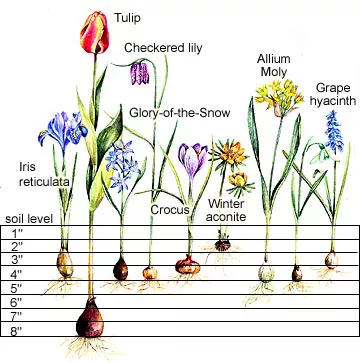
Planting bulbs can seem complicated, but you can simplify the process by following this general rule of thumb: plant twice as deep as your bulb height. For instance, if the bulb is two inches tall, dig a hole and plant the bulb four inches down. You can also add a couple of inches of garden mulch on top of the soil after planting without hindering the bulbs when they emerge in spring.
When to Plant Spring Bulbs
While the depth may be a simple formula, exactly when to plant bulbs is not a specific date–it's more of a window of time. In other words, the best time for planting spring-blooming bulbs depends on where you live more than your datebook. In general, aim for about four to six weeks before your area's expected first fall frost. That will give your bulbs enough time to grow roots, but not enough time to produce leaves and flowers.
1. Reticulated Iris
Irises are a big family of plants, and reticulated irises (Iris reticulata) are among the earliest to bloom. And unlike many other types of irises, their purple, blue, or white flowers grow from bulbs. Plant the bulbs 4 inches deep and 3 inches apart in the fall when temperatures are between 40-50℉. Reticulated irises do best in Hardiness Zones 5-9.
2. Tulips
A classic spring flower, the elegant tulip comes in countless varieties, spanning the colors of the rainbow. Tulips (Tulipa spp.) are a garden staple for spring color. Most high-quality tulip bulbs will be 2 to 3 inches tall and should be planted at least 6 inches deep. Many experts say deeper planting helps the bulbs produce better flowers. The bulbs have flattened bottoms; plant them pointy side up. Tulips grow in Zones 3-7 where they can be planted about six weeks before the first frost in the fall. Gardeners in Zones 8-10 should plant tulip bulbs in late November or early December.
3. Daffodil
A cheery sign of spring, daffodils (Narcissus spp.) are a welcome addition to any yard or garden. One of the easiest spring-blooming bulbs to grow, plant daffodils pointy side up and about 8 inches deep (plant miniature types about 4 inches deep). Note: The pointy ends of the daffodil are called noses. Bulbs with more than one nose usually bloom the best. Plant these bulbs in early fall, as soon as they become available in stores. Daffodils will grow in Zones 3-8.
4. Striped Squill
Striped squill (Puschkinia scilloides) is the perfect addition to a woodland or rock garden because it's deer- and rodent-resistant. Striped squill is a naturalizing plant, meaning it has the ability to reproduce and spread itself around without any help from you. The plant does this by releasing small bulb offsets (called bulbils) and self-sowing seeds in some cases. Plant these bulbs 4 inches deep and keep them at least 4 inches apart to allow room for new growth.
Striped squill is a relatively short plant that grows 6-8 inches in height. Plant on the outside edge of planters and gardens for easy visibility.
5. Crocus
Small but mighty crocus (Crocus sativus) is one of the first of several miniature bulbs to pop up in spring, and even late winter in warmer areas. Technically, a crocus comes from a corm not a bulb, but they are treated similarly. Crocus corms look like miniature coconuts, and often will have a slightly pointed side; that side goes up. If a corm lacks a point, look for the little root scars on the bottom of the corm and place them with that side facing down. Plant the corms about 4 to 6 inches deep. Crocuses can be grown successfully in Zones 3-8.
6. Glory-of-the-Snow
When these pastel-colored cuties bloom, snow may still be on the ground. Hence the name, glory-of-the-snow (Chionodoxa luciliae). These tiny flowers are hardy and thrive in Zones 3-8. Plant them in late fall when the soil temperature is between 40-50℉. Place each bulb 2-3 inches deep in the soil. Glory-of-the-snow is also a naturalizing plant. Plant the bulbs once, and these flowers should come back year-after-year, while expanding its population.
7. Hyacinths
A late-spring garden delight, hyacinths (Hyacinthus spp.) add cheery color and a sweet scent to any garden. Blooms come in several hues including blue, red, white, yellow, and purple. Hyacinths have larger bulbs, so it's best to plant them 6-8 inches below the soil surface with the pointy sides facing up.
Hyacinth bulbs can irritate skin, so it's best to wear gloves when handling them. They can also cause respiratory irritation; wear a mask while planting.
8. Star of Bethlehem
Another self-naturalizing plant, star-of-Bethlehem (Ornithogalum spp.) is a European native but thrives in Zones 4-9. In the fall, plant this bulb around 4 inches deep. Because of its spreading tendencies, star-of-Bethlehem makes a pretty spring groundcover in woodland areas. But it also can spread out of control, so make sure you have a way to keep it in bounds before planting.
Star of Bethlehem is invasive in some parts of the country, so check before planting.
9. Allium
You wouldn't guess these beauties are actually ornamental onions. While alliums may be a member of the onion family, they're not for eating. They only smell like onions if you crush the foliage. There's a tremendous number of alliums available. These garden stunners come in rich colors like white, purple, blue, pink, and yellow. Some can produce blooms as large as a volleyball. Small types grow from bulbs no bigger than your thumbnail; big bulbs can be larger than your fist. Plant them from 2 to 12 inches deep depending on the size of the bulb. Most alliums have a flat bottom and pointy top; plant them pointy side up. Alliums do best in Zones 3-9.
10. Summer Snowflake
Despite its name, summer snowflake (Leucojum aestivum) blooms in mid- to late-spring in Zones 4-9. This dainty flower makes the perfect garden addition with its subtle sweet fragrance. Summer snowflake has bell shaped petals with small green dots at the end. Bulbs should be planted 3-4 inches deep in soil and 4 inches apart to support healthy plants.
Summer snowflake is invasive in some parts of the country, so check before planting.
11. Crown Imperial
Give your garden the royal treatment with crown imperial (Fritillaria imperialis). These plants do best in Zones 5-9. You can't miss the bulb because it's as big as your fist. Plant crown imperial bulbs about 8 inches deep. Try to place them at a slight angle so water doesn't collect in the dimple at the top of the bulb. Crown imperials have been nicknamed the "stink lily" for their pungent odor. But, this skunky smell repels deer and other pests that eat bulbs. However, you may want to plant these beauties on the edge of your garden to avoid their aroma yourself.
12. Anemone
This charming spring bloomer grows from little wrinkly tubers that look sort of like raisins. Plant these anemones about 4 to 5 inches deep on their sides. For best results, soak the tubers in water for a couple of hours before planting. Your Hardiness Zone determines what season you can plant anemone bulbs. In Zone 7 and above, they can be planted in the fall. If you live in Zone 6 or below, the bulbs will need to be warmed indoors, then planted at the end of winter or early spring.
13. Grape Hyacinth
Though the flowers somewhat resemble true hyacinths, grape hyacinth (Muscari spp.) is tiny in comparison. The clusters of little bell-shaped blooms also look like bunches of grapes, and actually give off a grapey bubblegum fragrance. A great small bulb for planting just about anywhere, grape hyacinths offer clear blue, purple, or white blooms. Like many true bulbs, grape hyacinths have pointy ends that you plant facing up. Plant them about 4 to 6 inches deep.
Muscari neglectum is a species of grape hyacinth that is considered invasive in some parts of the country, so check before planting.