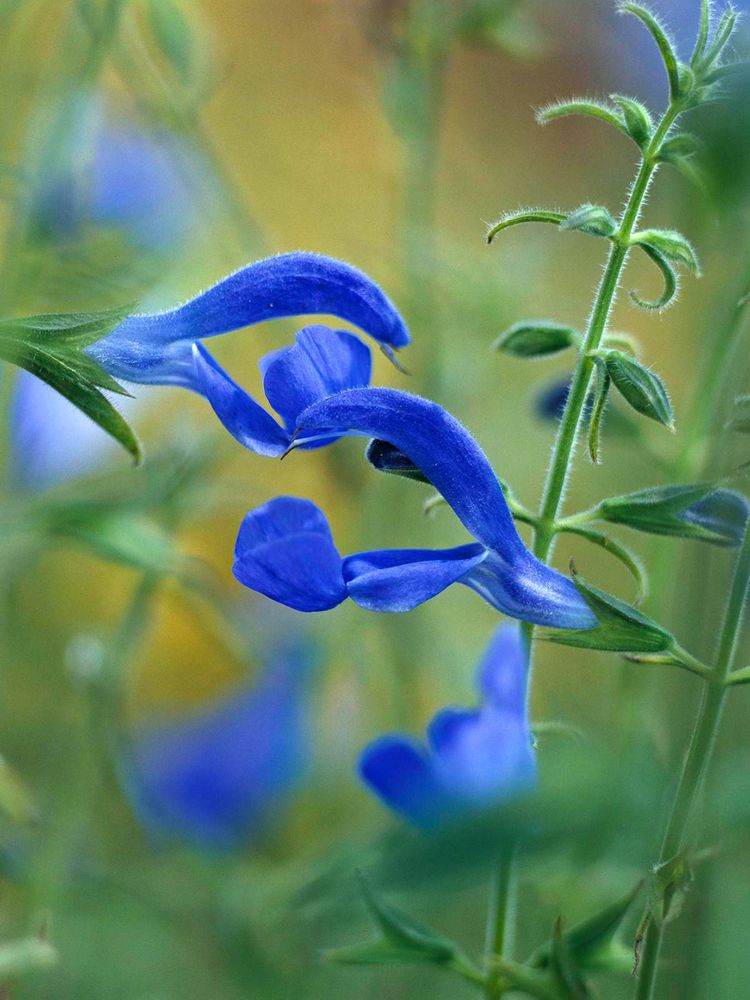
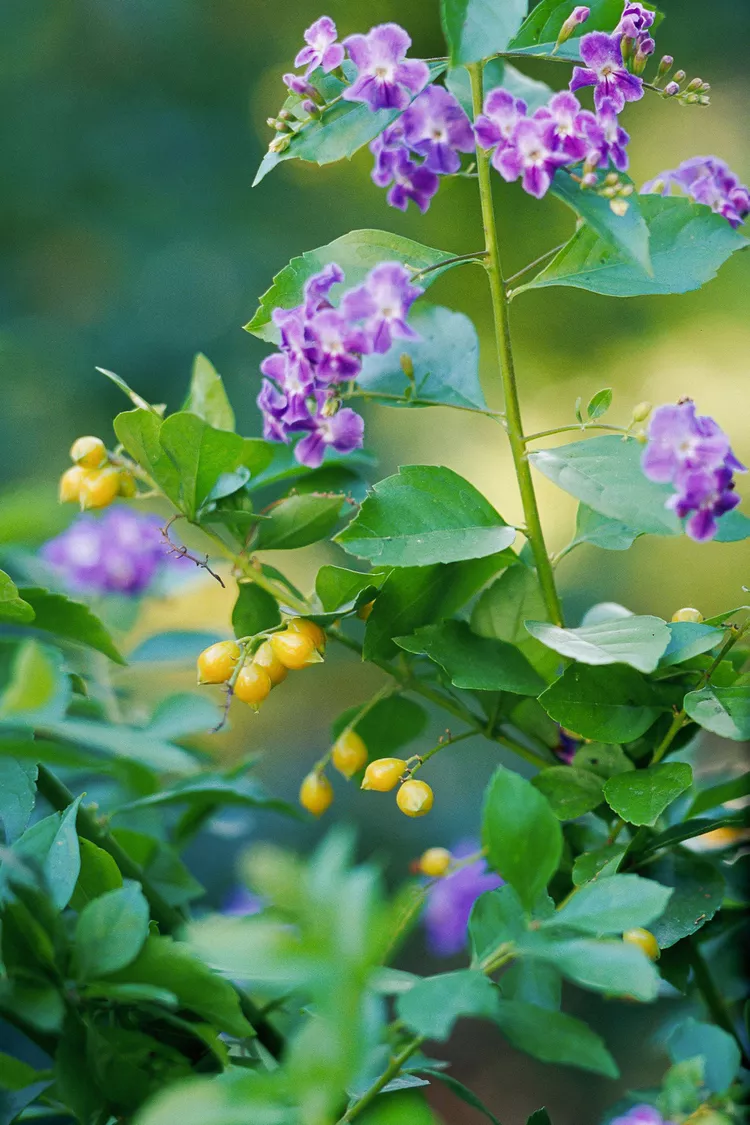
Duranta is a tropical powerhouse commonly referred to as golden dewdrop. The fast-growing shrub is primarily known for its beautiful blue blooms. Most brilliant blossoms are a vibrant periwinkle shade edged in white, although there are also varieties in purple hues and some in bright white. After blooming, duranta continues to put on a show with golden berries—a unique trait referenced in the plant’s common name.
Though its delicate flowers are the shrub's most popular characteristic, many varieties of duranta also have highly ornamental foliage. Typically, duranta foliage consists of simple green leaves with an appealing glossiness, but white- or cream-variegated varieties are also available. Additionally, some duranta types have completely golden-hued leaves, while others have light green leaves centered with a golden edge.
With the potential to become quite large where hardy—some varieties reach over 15 feet—duranta is a great option for a quick-growing, living fence. Smaller varieties can even be grown as houseplants.
Duranta berries are highly toxic to children and pets. Note that birds delight in eating the berries and are not affected by their toxins.
Duranta Overview
| Genus Name | Duranta erecta |
| Common Name | Duranta |
| Plant Type | Annual, Shrub |
| Light | Part Sun, Sun |
| Height | 1 to 15 feet |
| Width | 2 to 6 feet |
| Flower Color | Blue, Purple, White |
| Foliage Color | Blue/Green, Chartreuse/Gold |
| Season Features | Fall Bloom, Spring Bloom, Summer Bloom |
| Special Features | Attracts Birds, Good for Containers, Low Maintenance |
| Zones | 10, 11, 9 |
| Propagation | Seed, Stem Cuttings |
| Problem Solvers | Good For Privacy |
Where to Plant Duranta
In the garden, duranta grows as an annual in all regions except USDA Zones 9-11, where it is a shrub. The plant needs full sun for the best flower production and a location big enough to handle its large size. When grown as an annual, the plant reaches a couple of feet in height. As a shrub in Zones 9–11, duranta quickly grows to 15 feet or taller, making it an effective privacy screen. The plant is salt-tolerant, so it’s also a good choice for coastal gardens. Additionally, duranta can be grown in containers and moved indoors when the weather turns cold.
Invasive Plant
Because of the many berries duranta plants produce, they can become invasive in tropical areas. Check with local authorities if you have any concerns.
How and When to Plant Duranta
Plant duranta in the spring in a large area that can handle its mature size. Dig a hole twice as big as the plant’s root ball and deep enough so the top of the root ball sits a half-inch above soil level. Loosen the soil in the hole with a shovel and break up the soil removed from the hole; it will be used to backfill after planting.
Water the plant in its nursery container, and then slip it out and loosen the roots with your hands. Cut away any roots that circle the root ball tightly. Position the duranta in the hole and backfill the hole halfway with the reserved soil. Tamp it to prevent air pockets. Repeat this action at three-quarters full and again when the plant is sitting just above the soil line.
Duranta Care Tips
Duranta is an extremely easy-to-grow annual or shrub, depending on your location.
Light
Full sun is best for duranta, as this light condition encourages a better habit and doesn’t let the plant loosen as it would in the shade. Flower production is also much better in full sun. Duranta will grow in partial sun, but a shady location dramatically inhibits its ability to bloom.
Soil and Water
Duranta plants thrive in well-drained, moist, fertile soil. Other soil types are tolerable as long as they drain well. Water duranta plants frequently until they are established. After that, duranta should receive at least an inch of rain (or water) per week. If it starts to wilt, it will quickly bounce back once watered.
Temperature and Humidity
Duranta loves hot, humid weather. When grown as an annual, it doesn’t tolerate temperatures much lower than 40°F. If the plant is in a container, bring it indoors when the temperature approaches this point.
Fertilizer
When duranta plants are in rich soil, they don’t need any additional fertilizer as they aren’t heavy feeders. However, if your soil is rocky or poor, apply an all-purpose general fertilizer monthly during the growing season, following the manufacturer’s instructions.
Pruning
Duranta grows quickly and needs frequent pruning to maintain a neat appearance. The overall habit of duranta tends to be semi-weeping, but the plant can be manicured to rounded shrubs. In landscapes where duranta is hardy, it’s best to avoid planting it near sidewalks and paths, as it quickly overtakes walkways and requires constant maintenance.
Many duranta varieties have small thorns on their branches—another reason to keep the plants away from paths. Some plants that are thornless when young develop thorns as they mature. Only a few duranta types are completely thornless, so use gloves to protect your hands when working with the plant.
Potting and Repotting Duranta
When planting duranta in containers, use a standard, well-drained potting mix and add some slow-release fertilizer following the product directions. Move the container indoors when the temperature drops or position it next to a south-facing wall for warmth. Even in areas where it is cold-hardy, duranta rarely tolerates temperatures in the 20s. During winter, plants die back to the ground or their container’s soil level, making a return the following year.
Pests and Problems
Duranta is usually disease-resistant, but it is susceptible to pests including mealybugs, white flies, and scale, all of which can be treated with insecticidal soap or neem oil.
How to Propagate Duranta
Duranta plants are easy to propagate using stem cuttings. Take a 6-inch cutting in the summer and remove leaves from the bottom half. Dip the cut end in rooting powder and plant it in a pot filled with potting mix. Keep the potting mix moist until you see new growth.
You can harvest seeds from plants to propagate duranta, but the plants won’t be true to the parent because most duranta plants are hybrids. Remove the seeds from the berries and press them into potting mix. When kept in a warm environment of about 70°F, the seeds germinate in one to two months.
Types of Duranta
‘Gold Edge’ Duranta
Duranta erecta ‘Gold Edge’ is a variety grown primarily for its foliage, which displays rich green leaves edged in bright gold. The duranta type produces light blue flowers in summer, followed by orange berries. ‘Gold Edge’ duranta thrives in Zones 9-11.
‘Sapphire Showers’ Duranta
Duranta erecta ‘Sapphire Showers’ is an extremely floriferous selection. Deep blue flowers with a white edge cover plants in summer and throughout the year in tropical climates. ‘Sapphire Showers’ duranta is hardy in Zones 9-11.
‘Alba’ Duranta
Duranta ‘Alba’ bears pure-white flowers followed by yellow fruit. It grows 1-2 feet tall as an annual and up to 6 feet tall as a tropical shrub in Zones 9-11.
‘Variegata’ Duranta
Duranta erecta ‘Variegata’ is grown for its beautiful variegated foliage. This duranta variety grows green leaves edged heavily in creamy yellow. During summer, blue blooms appear. ‘Variegata’ duranta rapidly grows to 15 feet in Zones 9-11.
Duranta Companion Plants
Impatiens
Impatiens is a shade-loving plant that blooms in nearly every color except true blue. The floral beauty is well suited to growing in the ground or a container. If you have a bright spot indoors, you may be able to grow impatiens all year as an indoor plant.
Sweet Potato Vine
Among the most popular container-garden plants, sweet potato vine is a vigorous grower that draws attention. Its colorful foliage, in shades of chartreuse or purple, is a show-stopping accent. It makes a big impression when multiple sweet potato vine plants are grown in a large pot. Sweet potato vine thrives in warm temperatures, prefers moist, well-drained soil, and tolerates sun or shade.
Tweedia
If you love blue flowers, tweedia is for you. The pale plant produces mesmerizing turquoise blooms all season on grayish, felted foliage. The fragrant five-petal flowers make excellent cut flowers, complementing any bouquet. A short vine growing 2 to 3 feet tall, tweedia twines around short trellises or other supports—try a shrubby branch cutting inserted into the soil for a naturalistic support.