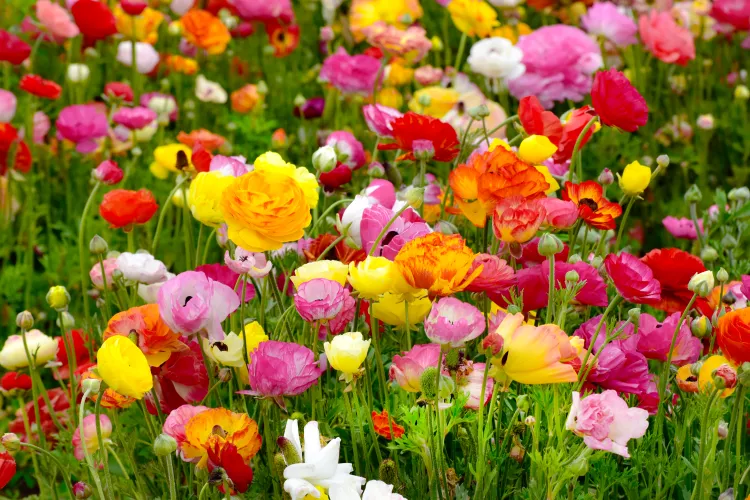
Ranunculus flowers, also known as buttercups, are hardy, cool-season perennials with delicate leaves that resemble paper flowers. They come in several colors and grow best in areas where winters are mild and springs are cool and long. Some varieties with tiny white and yellow flowers can even be found in aquatic locations. Ranunculus like warm, not hot, temperatures; if your garden is in an area where the winter is mild and spring is cool, you will have luck planting these little gems.
Most ranunculus varieties are cold-hardy only in USDA Zones 8-11, but they can grow in areas as cold as Zone 4 if they are moved to a protected area for winter.
The leaves of all species of ranunculus are toxic to humans, dogs, cats, and horses when ingested.
Ranunculus Overview
| Genus Name | Ranunculus |
| Common Name | Ranunculus |
| Plant Type | Perennial |
| Light | Part Sun, Shade |
| Height | 12 to 24 inches |
| Width | 6 to 24 inches |
| Flower Color | Orange, Pink, Purple, Red, White, Yellow |
| Foliage Color | Blue/Green |
| Season Features | Spring Bloom, Summer Bloom |
| Special Features | Good for Containers |
| Zones | 10, 11, 8, 9 |
| Propagation | Division |
Where to Plant Ranunculus
Ranunculus can be planted in flower beds, borders, and containers as long as they are positioned in well-drained soil with adequate full sun or partial shade. They are most commonly grown in Western and Southern states where the winters are mild. Some species flourish next to ponds or streams and serve to accent garden water features on your property. Ranunculus also grows well in containers for patios or other seating areas.
How and When to Plant Ranunculus
Plant ranunculus corms in Zones 8–11 in October or November so that they bloom during the following spring in warm states. In Zone 7 and colder, plant pre-sprouted ranunculus corms in early spring, a week or two before the last frost date. In either case, plant the corms 2 inches deep in well-draining soil. Expect the ranunculus to stop blooming when temperatures reach 80°F.
Ranunculus corms can be purchased at local garden centers or online. When and how you plant the flowers depends on where you are located. These flowers do not enjoy intense heat and are better planted in cool areas. The plants bloom approximately 90 days after the corms are planted.
Prepare indoor container-grown ranunculus in the fall. Soak the corms for four to six hours before planting them in a pot. Use loam-based compost with 20 percent horticultural grit and a slow-release fertilizer added to help with drainage and plant health. Space the soaked corms with claws facing downward about 4 inches apart, and cover with 2 inches of compost or soil. Place the pots near a bright grow light with sufficient airflow to prevent the growth of gray mold. When leaves start to grow—and after the last frost—the plants can be transplanted.
Ranunculus Care Tips
Light
Hardy perennial ranunculus should be planted in full sun or partial shade. If they are planted in full shade, they will not flower.
Soil and Water
If you’re eager to add ranunculus blooms to your garden, supply them with moist, well-draining soil that won’t dry out but isn’t waterlogged. Water established plants in the morning once a week. Stop watering when the plant becomes dormant in the fall and stops producing flowers.
Temperature and Humidity
The plants thrive best when grown in mild temperatures in spring, summer and into the start of autumn. Ranunculus plants can't handle freezing temperatures. Gardeners in colder zones can dig up the corms and store them in a cool, dry place for the following year. Grow ranunculus in average humidity. High humidity increases the chances of fungal infections.
Fertilizer
When border-planted ranunculus start to grow, the plants appreciate regular feedings with a balanced fertilizer, following the product instructions, or bone meal. Plants that grow in meadows or along ponds and streams do not need feeding.
Pruning
No pruning is needed, but remove any damaged or diseased foliage, sterilizing your shears before cutting the plant. Deadhead ranunculus blooms to encourage additional blooms.
Potting and Repotting
Ranunculus plants grow well in containers as long as the container offers excellent drainage. Choose a container large enough for several corms spaced 3–4 inches apart and fill it to within 4 inches of the top with well-draining potting soil. Soak the corms for three to four hours and place them in the container with their claws facing downward. Cover with an additional 2 inches of potting soil. Water the container and place it in a location with a temperature of about 60°F. No light is necessary until foliage appears.
Repotting isn't necessary for ranunculus plants grown as annuals. However, those grown in containers as perennials will spread and eventually outgrow their containers. In that case, repot in a larger container using fresh potting medium, or divide the plants and repot.
Pests and Problems
Ranunculus plants can suffer from powdery mildew, gray mold, and aphids. Powdery mildew is a common fungus that presents itself as light gray or white powdery spots on leaves, stems or flowers. To prevent this, ensure the ranunculus plants are well watered and located in at least partial sun. Remove any affected foliage.
As for gray mold, which flourishes in high humidity, space out the plants to maintain good air circulation. Discard any affected foliage, flowers, or stems.
Aphids are common garden insects that can be treated with insecticidal soap or neem oil.
How to Propagate Ranunculus
The easiest way to propagate ranunculus is by division. In time, each ranunculus corm will multiply to several corms. In late fall, lift a mature plant and its corms from the soil and gently pull apart the corms. Replant them separately in a prepared garden bed or container in Zones 8-11 or store the corms for the following season in Zones 7 and colder. Before placing them in storage, dry them thoroughly in full sun and then place them in dry peat moss in a mesh bag.
Types of Ranunculus
‘Flore Pleno’
Ranunculus acris 'Flore Pleno', also known as double meadow buttercup, won the Award for Garden Merit from the Royal Horticultural Society, is relatively pest-free, and thrives in moist borders in full sun. The golden yellow flowers grow in patches, with each individual flower reasonably petite. 'Flore Pleno' grows 1–2 feet tall and wide.
Alpine Buttercup
Ranunculus alpestris, known as alpine buttercup, is a compact, delicate perennial with white flowers with yellow centers surrounded by glossy, dark green foliage. Alpine buttercup grows to 8 inches tall and wide. When planted in the garden, it blooms from late spring to mid summer.
Persian Buttercup
Ranunculus asiaticus, the Persian buttercup, is a type of ranunculus that comes in various colors, including orange, pink, red, and yellow. They look great in flower beds and containers and are frequently used in wedding bouquets or vase arrangements. Persian buttercup grows 1–2 feet tall and wide.
White Water Crowfoot
Ranunculus aquatilis, white water crowfoot, is an aquatic variety of ranunculus best grown in the mud near ponds and streams. It even grows in slow-moving shallow water. It is known as a British wildflower, boasting tiny white and yellow blooms growing in mats on the water’s surface.
Little-Leaf Buttercup
Ranunculus abortivus, little-leaf buttercup, is a short-lived perennial that grows from 6 to 24 inches tall. The flowers are yellow and very small, with basal leaves that are kidney-shaped.
St. Anthony's Turnip
Ranunculus bulbosus, better known as bulbous buttercup or St. Anthony’s turnip, is a perennial variety of ranunculus that grows in North America and has an unfortunate reputation for being weedy. It blooms from March to June, featuring small, sweet yellow buttercup-like flowers.